
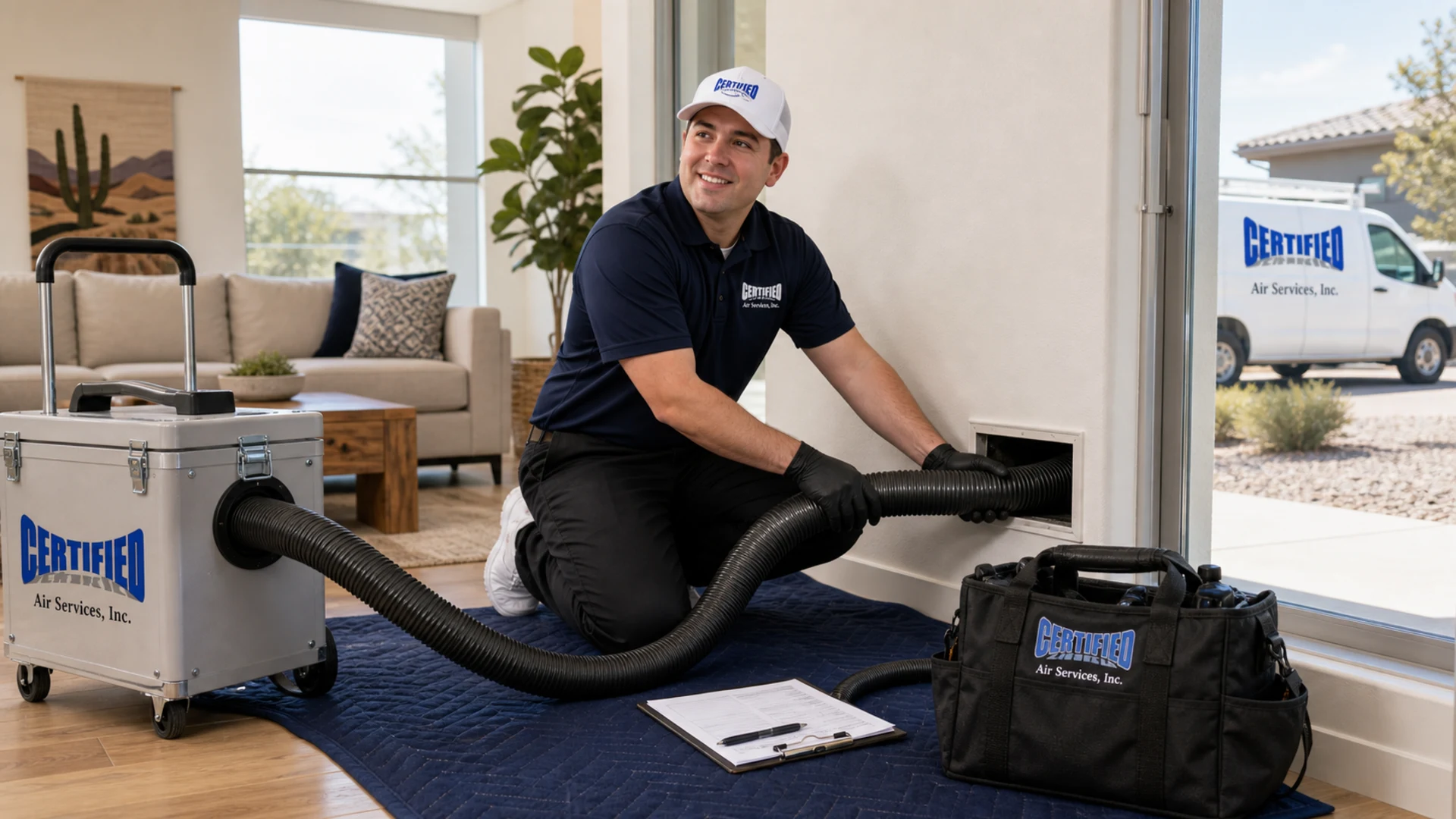
Arizona dust is part of life in the desert, but that does not mean it should be ignored inside HVAC systems.
Dust can collect in filters, return grilles, ductwork, coils, blower compartments, and indoor spaces. Over time, that buildup can affect airflow, comfort, system performance, and indoor air quality.
Where dust causes problems
Dust-related HVAC issues are usually cumulative. Small amounts build up over weeks and months, especially during windy weather, renovation work, heavy AC runtime, or after a home has been closed up for long periods.
- Filters clog faster and reduce airflow.
- Return grilles and registers collect visible dust.
- Ductwork can hold dust, debris, or construction residue.
- Coils and blower components may work harder when dirty.
- Indoor air can feel stale, dusty, or irritating for sensitive occupants.
When to discuss a duct inspection
Duct cleaning may be worth discussing if you see dust blowing from registers, notice repeated dust buildup shortly after cleaning, recently completed construction or renovation, or inherited a property with unknown HVAC history.
It can also be useful when paired with filter upgrades, air purification options, or HVAC maintenance so the entire system is reviewed together.
Arizona HVAC service should match the climate
The right solution depends on the property, system design, duct condition, filter setup, and how the building is used.
Certified Air Services AZ provides duct cleaning, HVAC maintenance, and indoor air quality support for Arizona homes, businesses, and facilities.
Distinguish ordinary dust from a reason to inspect
Dust on a register does not by itself establish that the ducts need cleaning. Describe where debris appears, whether material is being released into rooms, and any recent renovation, pest or moisture history. A system inspection can separate contamination from damaged ducts, filter-fit problems and other airflow concerns.
EPA does not recommend cleaning every home’s ducts on a fixed schedule. Cleaning ducts alone is not a demonstrated guarantee of better health or lower energy bills. Suspected mold needs qualified assessment, and wet or moldy insulated material may need replacement.
Keep the next step specific
Ask which components will be inspected, what evidence supports cleaning, and how any underlying source will be addressed. Review duct inspection and cleaning with equipment maintenance when the complaint includes comfort or airflow.
Reference: EPA’s residential duct-cleaning guidance.