
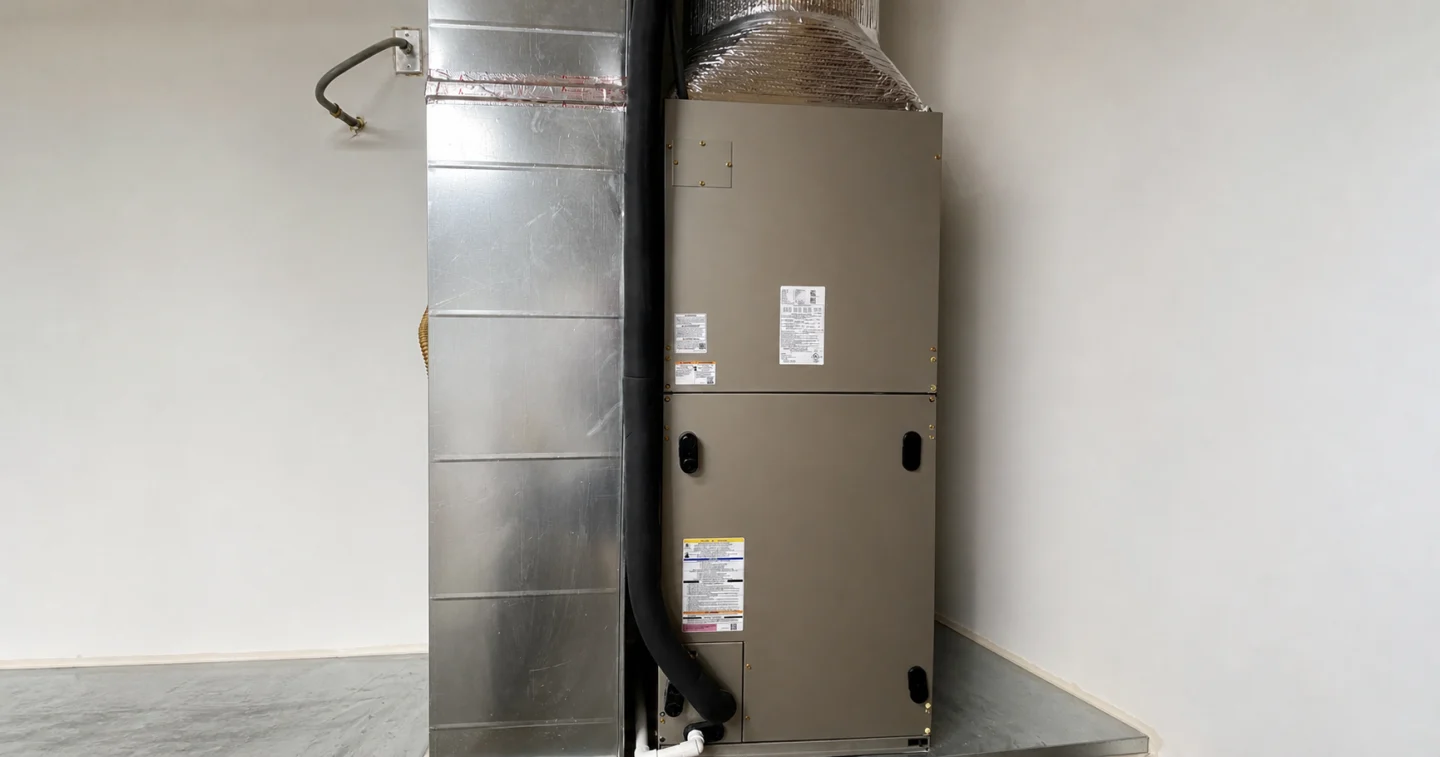
If your home in the Quad City Area or a nearby community already has a heat pump, the rules are about to change. Under the current program rules, Efficiency Arizona may allow a qualifying replacement when the new system is more efficient. But rebates for replacing gas, propane, or oil equipment with an electric heat pump are ending, so what your home uses today matters.
Before you order equipment or schedule an installation, find out what type of system you have and complete the official screening. Do not begin work before the project is approved and funds are reserved.
September 2026 Program Update
The short version
- Older electric HVAC: may qualify for an upgrade to an eligible heat pump.
- Less-efficient existing heat pump: may qualify for replacement with a more efficient model.
- Gas, propane, or oil system: removing it and replacing it with a rebated heat pump will no longer qualify.
- Heat pump added alongside fossil-fuel equipment: may qualify when the existing fuel-burning system stays in place.
- The heat-pump measure is capped at $8,000, and all eligible HEAR rebates combined are capped at $14,000 per household.
- New reservations beginning September 1 follow these rules, and approval must happen before work begins.
What changes on September 1, 2026?
These changes mainly affect the type of equipment already in the home. For HVAC projects, they open a clearer path for some all-electric homes and homeowners replacing an older heat pump.
- Electric-to-electric upgrades: a standard electric HVAC system may be upgraded to a qualifying heat pump.
- Existing heat-pump replacements: a less-efficient heat pump may be replaced with a more efficient qualifying model.
- Heat pumps added alongside fossil-fuel systems: a qualifying heat pump may be added without removing the existing fossil-fuel equipment.
- Non-primary systems: a qualifying heat pump no longer has to serve as the home's primary heating and cooling source. Efficiency Arizona determines final equipment and project eligibility.
- Home-envelope work: air sealing or insulation may be required as part of a heat-pump project when the program determines it is needed.
A newer or more efficient system is not automatically rebate-eligible. Efficiency Arizona reviews the existing equipment, proposed replacement, and full project before reserving funds.
What no longer qualifies?
Starting September 1, the rebate cannot be used to remove a gas, propane, oil, or other fossil-fuel appliance and replace it with an electric appliance. For HVAC projects, that means a gas furnace cannot be removed and replaced with a rebated heat pump under the new reservation rules.
The same no-fuel-switching rule applies to other covered appliance categories, including water heating, cooking, and clothes drying. Electrical panel or wiring rebates remain tied to the installation of an eligible electric appliance.
How much could an Arizona household receive?
Heat-pump rebates are capped at up to $8,000. A household can receive up to $14,000 total across all eligible HEAR upgrades. Those are limits, not guaranteed payouts. Your actual rebate depends on income, project cost, equipment approval, and available funding.
- Households below 80% of Area Median Income may receive up to 100% of the eligible heat-pump product cost, subject to the $8,000 measure cap.
- Households from 80% through 150% of Area Median Income may receive up to 50% of the eligible heat-pump product cost, subject to the $8,000 measure cap.
- Households above 150% of Area Median Income are not eligible for these income-qualified rebates.
For context, the 2026 Yavapai County table puts the 80% AMI line at $53,450 for a one-person household and $76,300 for a four-person household. The 150% AMI figures are $106,800 and $143,100. Check the official table for your household size rather than estimating. The current single-family program is limited to owner-occupied homes.
Can an existing heat pump qualify for a rebate?
Yes, an older heat pump can now be considered. The replacement must be more efficient, ENERGY STAR certified, and approved as part of the project. Not every replacement will qualify; Efficiency Arizona makes the final call after reviewing the existing system and proposed equipment.
Already applied under the old rules?
If you applied by August 1 under the prior gas-to-electric rules, contact your case manager now. The program must secure your approved reservation by August 28, including any required assessment and contractor scope.
Once the reservation is secured, installation and payment can happen later. A submitted application alone is not enough, and completed work cannot be reimbursed retroactively.
How Quad City Area homeowners should apply
- Complete the official eligibility screening. Start with Efficiency Arizona, not an equipment purchase.
- Provide the requested household and property documents. The program may also require a home energy assessment.
- Wait for program approval and a rebate reservation. Screening alone is not final approval.
- Work with a contractor in the Qualified Contractor Network. Confirm that the proposed equipment and complete scope match the approved project.
- Review your out-of-pocket cost. The rebate is generally applied to the contractor invoice, but maximums and cost-share rules still apply.
- Begin work only when the program authorizes it. Keep copies of approvals and project documents.
Certified Air Services serves homeowners across the Quad City Area and nearby communities, including Prescott Valley, Prescott, Chino Valley, Dewey-Humboldt, and Paulden. Homes in this area use a mix of electric systems, heat pumps, gas furnaces, and propane, so eligibility really does depend on what is already installed.
How Certified Air Services Arizona fits in
Certified Air Services Arizona is part of the Efficiency Arizona Qualified Contractor Network. If your application is approved and you choose or are assigned Certified Air Services, our team can identify your current system, recommend equipment that fits the project, and prepare the required HVAC scope.
Efficiency Arizona — not Certified Air Services — makes the final eligibility and funding decision. Network participation is not a state or U.S. Department of Energy endorsement.
Official Efficiency Arizona Resources
Verify your next step with the program
Program requirements can change. Use the official screening tool and program pages for the latest eligibility, product, income, and contractor information.
Start with screening, then talk through the equipment
Not sure whether you have a standard electric system or a heat pump? Start with the official screening. Once the program confirms which path applies, call Certified Air Services and we'll help you make sense of the equipment and installation options.
Information verified August 18, 2026. Rebate eligibility, amounts, timelines, and funding are controlled by Efficiency Arizona and may change.