
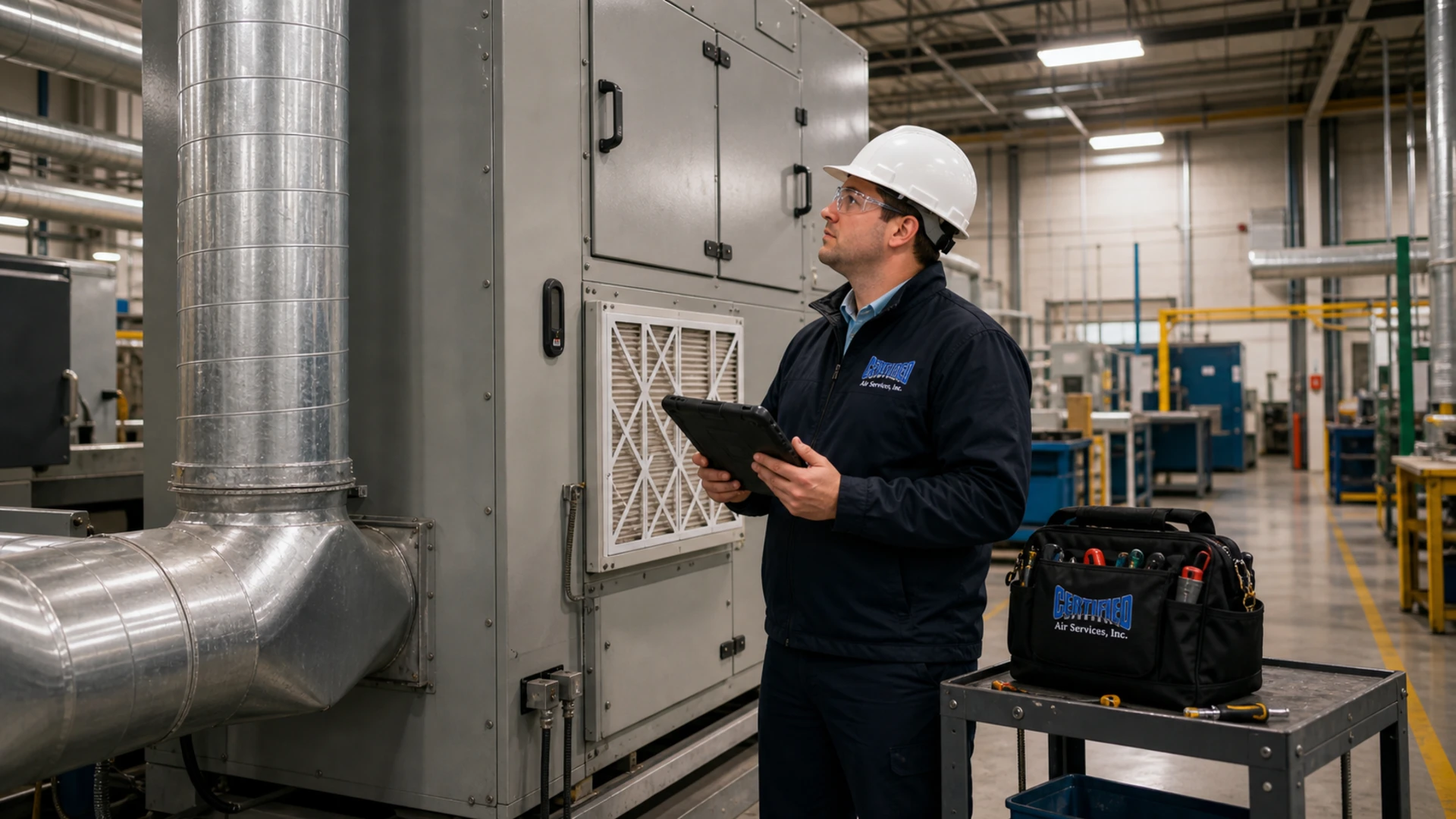
Industrial dust collectors do important work quietly. When they are sized, maintained, and serviced correctly, they help capture airborne dust, protect equipment, and support a cleaner operating environment.
In Arizona, dust collection systems often work against more than normal production debris. Outdoor dust, dry air, heavy seasonal use, and facility traffic can all add load to filters, ductwork, capture points, and fans.
Why dust collector maintenance matters in Arizona
A neglected collector can reduce airflow, leave dust near work areas, increase filter replacement frequency, and create avoidable downtime. For shops and industrial facilities, those problems can affect production schedules and employee comfort.
Routine inspection helps identify small issues before they become larger repair needs. That is especially important for facilities using sanding, grinding, blasting, cutting, woodworking, fabrication, or other dust-producing processes.
Plan observations and authorized maintenance separately
Every facility is different, but most dust collection systems benefit from a consistent inspection rhythm. A strong maintenance plan should include the following checks.
- Authorized service task, with required isolation: inspect filters for loading, damage, bypass, or incorrect fit.
- Check differential pressure readings and look for changes from normal operating range.
- Authorized service task, with required isolation: inspect ductwork for leaks, dents, disconnected sections, or dust buildup.
- Authorized service task, with required isolation: verify capture hoods and pickup points are positioned correctly for the process.
- Listen for unusual fan, bearing, or motor noise.
- Authorized service task, with required isolation: confirm pulse-cleaning systems are cycling correctly where applicable.
- Authorized service task, with required isolation: check dust disposal drums, drawers, and collection points before they overfill.
- Review whether production changes have outgrown the original system design.
Warning signs your system needs service
If dust is visible around workstations, filters plug faster than expected, airflow feels weak, or the system sounds different than normal, it is time to look closer.
Other warning signs include dust escaping at seams, recurring housekeeping issues, poor capture at tools or booths, unusual odors, or operators opening doors and windows to compensate for poor airflow.
Schedule industrial dust collector service
Certified Air Services AZ services Arizona facilities for industrial air quality, dust collector audits, ventilation balancing, and scheduled maintenance.
If your dust collector is struggling to keep up, schedule service before the issue turns into production downtime.
Separate operating observations from internal maintenance
Observe installed gauges, alarms and external conditions only from a safe, designated location. Do not open access doors, reach into a hopper or remove guards to complete a checklist. Report a change in capture, visible escape or unusual noise through the facility’s procedures.
Filter changes, blockage removal, emptying and internal inspection belong to trained, authorized personnel. Before service, use the equipment instructions and the site’s hazardous-energy isolation procedures, including stored energy where applicable. Material hazards and residue handling must be part of the work plan.
Make readings useful for the next service decision
Record the equipment identifier, date, operating state and installed pressure reading together. Compare like conditions with the established equipment baseline rather than applying a generic pressure target. Include filter changes, cleaning-system alarms and changes in the connected process.
Bring those records to an assessment of the collector and connected ventilation. A service plan should distinguish an operating observation from work that requires a shutdown.
Reference: OSHA guidance on controlling hazardous energy. Follow the manufacturer’s instructions and your facility’s applicable procedures.